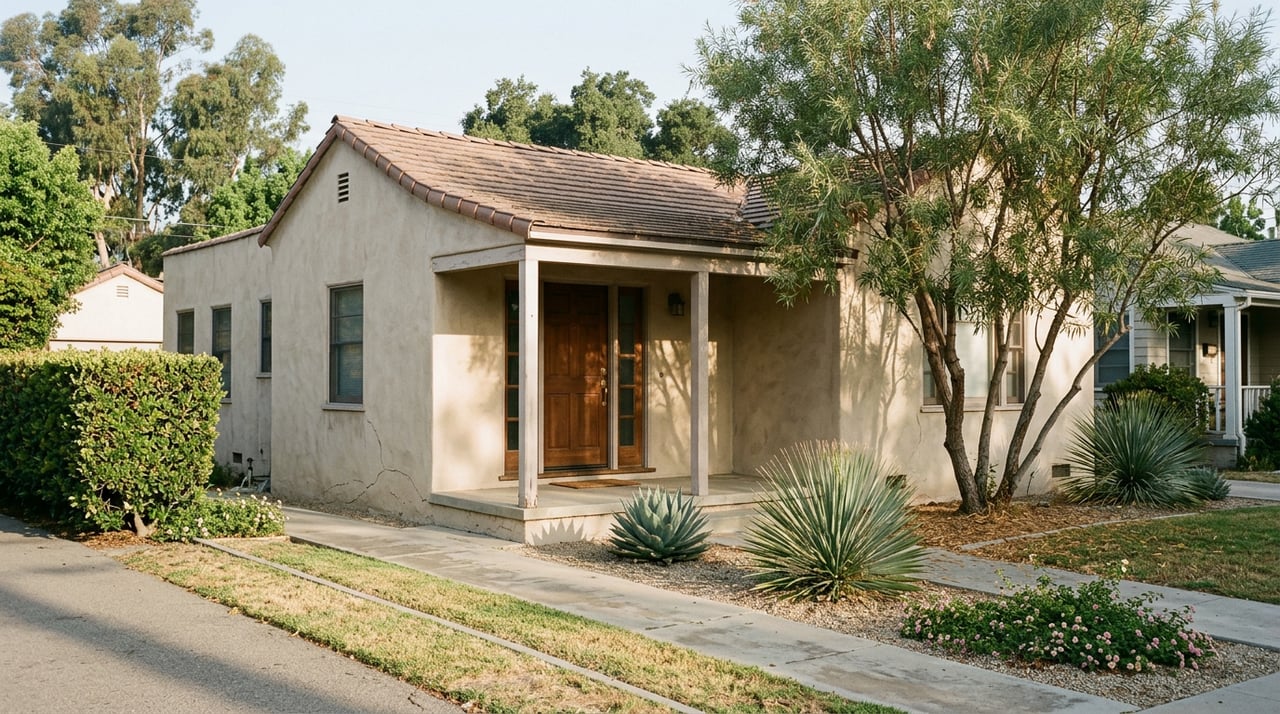
The Street Fair Left Roosevelt Row. The Restaurant Money Didn't.
September 3, 2026
September 3, 2026
Did First Friday actually get smaller this year, or did it just move indoors?
If you live anywhere near Roosevelt Row or the Willo pocket of Central Phoenix, you've probably noticed the difference without being able to name it. The sprawling vendor tables that used to spill across Roosevelt Street are gone. The road closures that turned the corridor into a pedestrian mall on the first Friday of every month stopped happening earlier this year. If you only measure the neighborhood by what used to fill the sidewalk, it looks like First Friday shrank. That reading misses what's actually happening a few doors down, where the capital is bigger than it's been in years.
First Friday has run on Roosevelt Row since the mid-1990s, when artists moved into a mostly empty downtown looking for cheap studio space. At its peak, the monthly event was pulling more than 20,000 people into the district, and the street-closure vendor market had grown into the kind of sprawling operation that outgrew its original footprint. The city's decision in April to scale back First Fridays followed a string of what organizers called "ugly" and violent incidents, including shootings, that made the road closures a public safety liability the city and Downtown Phoenix Inc. weren't willing to keep absorbing.
What didn't stop: gallery openings, restaurant specials, and the self-guided art walk that still runs through Roosevelt Row and the Historic Grand Avenue district every first Friday. The event lost its street party. It kept its actual content.
Longtime downtown advocates have been split on whether that's a loss worth mourning. Some argue the vendor market had already drifted from its original purpose, a scrappy artist showcase that turned into something closer to a general street festival, pulling attention away from the handful of working galleries that gave Roosevelt Row its name in the first place. Others point out that the district's rents and new development have already pushed out the working artists who built the scene, so the vendor market's exit is really just the latest symptom of a neighborhood that outgrew its own bohemia. Both readings agree on one thing: the version of First Friday that made Roosevelt Row famous nationally, one of the largest self-guided art walks in the country, has already changed shape once this year and is about to change again.
Here's the part that doesn't fit the decline narrative. While the street fair sat paused, three separate restaurant groups committed real capital to the same few blocks.
None of that is speculative money. It's committed capital, landing on the blocks immediately adjacent to where the street closures used to happen. A neighborhood that was actually losing relevance wouldn't be attracting seven figures in new restaurant investment on a single intersection.
The honest answer is that it spread out. Grand Avenue and the Warehouse District have been steady First Friday draws for years and didn't lose anything when Roosevelt's street fair paused. The Melrose District has started pulling noticeably larger crowds on First Fridays too, according to Pete Petrisko, one of the event's founding artists, who has watched the monthly walk evolve since its earliest days in the 1990s.
That matters if you actually live in this stretch of Central Phoenix, because it means the calendar didn't get thinner. It got wider. If Roosevelt Row on a given first Friday feels quieter than it did two years ago, Melrose or Grand Avenue on the same night might be busier than you'd expect. The self-guided nature of the walk always meant you were choosing your own route through a handful of districts. This year, the smart route just shifted a few blocks.
The piece worth watching isn't the restaurants opening now. It's the plan that doesn't exist yet.
Downtown Phoenix Inc. is working with the city, the Roosevelt Row Community Development Corporation, and neighborhood groups on what they're calling a reimagining of how Roosevelt Street gets activated on First Fridays. The stated goal is to make it easier for individual businesses to self-activate, hosting their own vendors or programming on their own property instead of relying on a citywide street closure. Phoenix Councilmember Anna Hernandez and Vice Mayor Kesha Hodge Washington met with business owners, neighborhood groups, and vendors over the summer as part of that process. Organizers have said the plan is expected to be unveiled this fall.
That timeline lines up with the current moment. If you live in this part of Central Phoenix, the next few months are when you'll actually find out whether First Friday gets its street-level energy back in a different form, or whether the corridor settles into a quieter, restaurant-and-gallery version of itself with the sidewalk activity handled building by building instead of block by block. Public safety in the district has reportedly improved since the road closures ended, which gives organizers room to experiment rather than react.
The mistake is treating a paused street fair as proof the neighborhood peaked. What actually happened is a reallocation. The sidewalk vendor market, which had grown past what Roosevelt Row's infrastructure and public safety resources could support, gave way to fixed investment in storefronts that don't disappear when the market changes format. A pop-up table can vanish overnight. A $4 million buildout at First and Portland can't.
If you've been wondering whether it's worth sticking around for what Roosevelt Row becomes next, the honest signal isn't the empty curb where the vendor tents used to be. It's the three restaurant groups who looked at the same corridor mid-transition and decided to bet on it anyway.
Frank Realty Group has spent years watching Central Phoenix's older, character-driven neighborhoods evolve block by block, from Willo's historic bungalows to the restaurant rollout happening on Roosevelt Row right now. If you're curious what a home in this part of the city is actually worth in today's market, or you're weighing renovation moves that would help it show well in a fast-changing corridor, Frank Realty Group can walk you through a free home valuation and renovation plan built around the neighborhood you actually live in.
Stay up to date on the latest real estate trends.
Jobey, Andy and the Frank Realty Group are dedicated to giving you an exceptional experience in your home buying and selling process. Contact us today to start your journey!