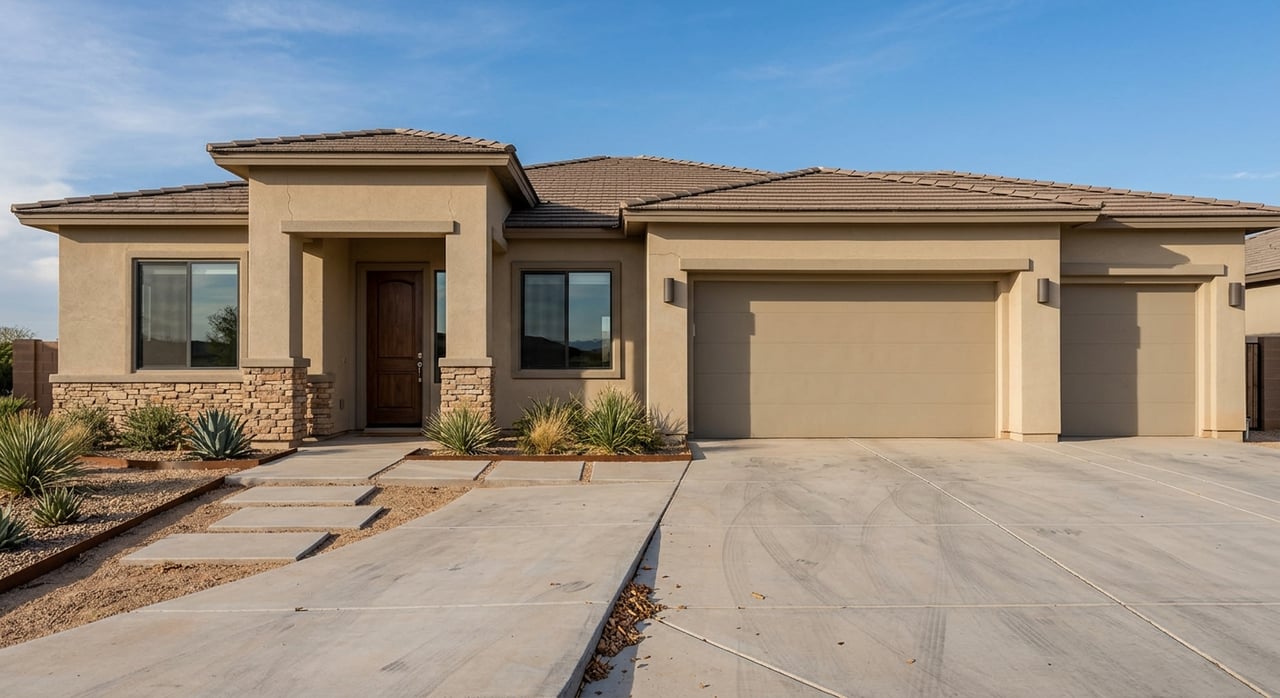
East Valley Relocation Guide for Phoenix Area Buyers
May 21, 2026
May 21, 2026
Moving to Phoenix can feel simple on paper until you start comparing the East Valley. One area can cut down your drive, another can stretch your budget, and another may give you a newer home with more elbow room. If you are trying to figure out where you fit best, this guide will help you compare the East Valley in a practical way so you can narrow your search with more confidence. Let’s dive in.
For most relocators, the biggest question is not just "Which city is best?" It is "What am I willing to trade for the lifestyle I want?" In the East Valley, the core tradeoff is usually access versus space.
If you want a shorter commute, more transit access, and a more connected feel, the inner East Valley tends to stand out. If you want more house, newer neighborhoods, or more lot space, the outer East Valley often becomes more appealing. The farther southeast you go, the more that pattern shows up in both commute times and transportation options.
Here is the broad comparison based on current commute and housing data:
| Area | Mean Commute to Work | Median Sale Price | General Fit |
|---|---|---|---|
| Tempe | 20.9 min | $480,000 | Shorter commute, transit access, mixed housing |
| Mesa | 24.7 min | $469,000 | Variety, flexible price points, broad housing mix |
| Chandler | 23.9 min | $531,000 | Employment access, suburban feel |
| Gilbert | 25.9 min | $580,000 | Amenity-rich suburban living |
| Queen Creek | 31.1 min | $634,990 | Newer homes, more space, longer commute |
| San Tan Valley | Not listed in Census set above | $425,000 | Affordability, car-dependent living |
Tempe offers the shortest mean commute in this group at 20.9 minutes. It also stands out as the most transit- and bike-friendly option, with six rail stations noted in the city guide and a more connected urban layout than the cities farther southeast.
Housing in Tempe is also more mixed than many relocators expect. With a median sale price of $480,000, plus lower condo and townhouse price points than many nearby suburbs, Tempe can work well if you want a smaller footprint, easier access to work, or a home type beyond the traditional single-family model.
Tempe is closely tied to Arizona State University and major employers including State Farm, Wells Fargo, Honeywell, Carvana, and Insight Direct. If your move is driven by job access, shorter daily drives, or a more urban pace, Tempe is one of the strongest East Valley options to consider.
Mesa is often the most flexible choice for buyers who want options. It is a large city with a wide mix of neighborhoods, home types, and price points, which can make it easier to match your budget and lifestyle without leaving the East Valley.
The current median sale price is about $469,000, which puts Mesa below Chandler, Gilbert, and Queen Creek in this comparison. The available mix also matters. Mesa shows a spread across single-family homes, townhouses, and condos, which gives you more room to compare tradeoffs if you are balancing budget, location, and home size.
Mesa also includes features that give it broad appeal, including canals, mountain views, the Mesa Arts Center, 16 museums, and two heavy-rail stations. If you want to stay in the East Valley but do not want to be boxed into one price tier or one type of neighborhood, Mesa is worth a close look.
Chandler tends to attract relocators who want a suburban setting with a strong employment base nearby. The city describes itself as a Community of Innovation, with major activity in aerospace, healthcare and bioscience, high-tech manufacturing, IT and software, autonomous vehicles, and business and financial services.
The city reports that its largest private-sector employers account for more than 35,000 jobs, or about 30% of citywide employment. That helps explain why Chandler is often a practical pick for people moving to the area for work, especially if they want to limit commute strain without choosing the more urban feel of Tempe.
Chandler’s median sale price is $531,000, which places it above Tempe and Mesa but below Gilbert and Queen Creek. If you want a polished suburban environment, a strong local job base, and a central East Valley position, Chandler often lands in the sweet spot.
Gilbert is one of the most established outer East Valley choices for buyers who want a strong suburban identity. It is known for its farming heritage, Gilbert Days, the Riparian Preserve, Agritopia, and a well-known mix of parks and restaurants.
That appeal comes with a more car-dependent setup. Transportation data shows a walk score of 29 and a transit score of 15, so most day-to-day life here is built around driving. The mean commute is 25.9 minutes, which is still manageable for many buyers but longer than Tempe, Chandler, and Mesa.
Gilbert’s median sale price is $580,000, with single-family homes at $612,500 in the current data. If you want a polished suburban feel, clear school planning tools like boundary maps and open enrollment information, and are comfortable with a higher price point, Gilbert may fit well.
Queen Creek is where many relocators look when they want a newer home, a larger lot, or a less dense setting. It has grown quickly, with a 2024 population of 83,781 and 40.8% growth since 2020 according to Census QuickFacts.
You can also see the tradeoff clearly here. Queen Creek has the longest listed mean commute among the cities in this comparison at 31.1 minutes, and its median sale price is also the highest at $634,990. In other words, more space does not always mean lower cost in the East Valley.
The town is associated with mountain views, more than 10,000 acres of hiking and horseback-riding trails, and access to San Tan Mountain Regional Park. If your priority is newer construction, room to spread out, and a small-town feel within the broader Phoenix metro, Queen Creek deserves a serious look.
San Tan Valley stands apart in this comparison because it is a census-designated place, not an incorporated city. For buyers focused on budget, that distinction may matter less than the numbers.
The median sale price is $425,000, making it the most affordable option in this set based on current figures. At the same time, transportation is much more limited. San Tan Valley has a walk score of 12, a bike score of 34, and no rail station listed, so it is best viewed as a strongly car-dependent market.
If your top goal is stretching your budget while still targeting newer suburban-style housing, San Tan Valley may be worth considering. Just go in with a clear picture of the tradeoff: lower entry price in exchange for less transit access and more driving.
If school planning is part of your move, the East Valley gives you several distinct district footprints to review. The key is to focus on boundaries, program options, and logistics rather than assuming every part of a city connects to the same schools.
Tempe is anchored by Tempe Union High School District, which serves about 11,000 students across six comprehensive high schools and covers Tempe, Guadalupe, the Gila River Indian Community, Ahwatukee Foothills, and parts of Chandler. Mesa Public Schools highlights multiple academic pathways, including International Baccalaureate, Montessori, Dual Language Immersion, STEM, College and Career Academies, and AP courses.
Chandler Unified serves more than 40,000 students across 45 school sites and highlights school choice, dual-language options, and career and technical education. Gilbert Public Schools provides open enrollment and current boundary maps, while Queen Creek Unified serves about 14,000 students across roughly 48 square miles and offers PreK-12 programming. In San Tan Valley, J.O. Combs Unified serves about 4,000 students across eight schools.
For many relocators, Chandler, Gilbert, and Queen Creek have the clearest district-level identity in the available sources. That does not make them the only places to consider, but it does mean school planning information is especially visible and structured in those areas.
The easiest way to narrow your search is to start with your daily routine. If you will be commuting often, access may matter more than square footage. If you work from home or want more room, the outer East Valley may give you better lifestyle alignment.
Here is a simple way to think about buyer fit:
When you are relocating, it is easy to compare cities only by price. But in the East Valley, your real decision usually comes down to how you want to live day to day. Commute time, transportation, neighborhood feel, and housing style can shape your experience just as much as the purchase price.
That is why a strong relocation plan should look at the whole picture. At Frank Realty Group, we help buyers compare Phoenix-area submarkets in a practical, honest way so you can move forward with clarity, not guesswork. If you are planning a move and want help narrowing down the right East Valley fit, connect with Andy Frank to start the conversation.
Stay up to date on the latest real estate trends.
Jobey, Andy and the Frank Realty Group are dedicated to giving you an exceptional experience in your home buying and selling process. Contact us today to start your journey!