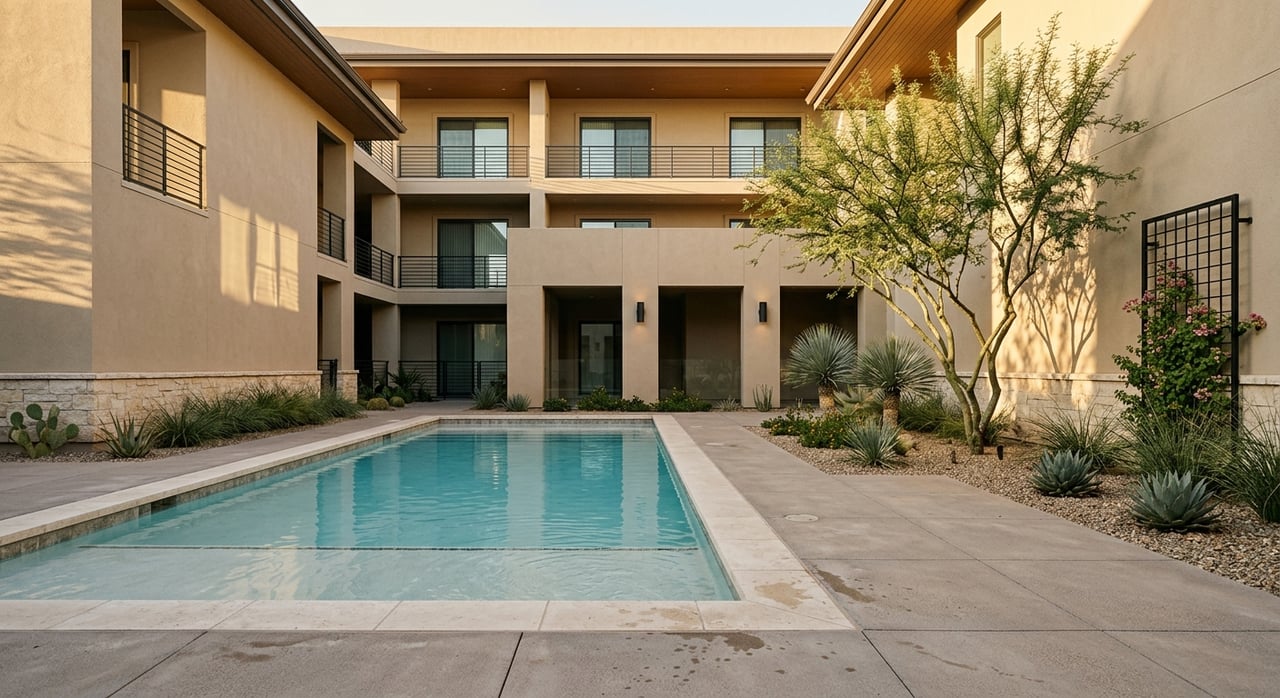
Old Town Scottsdale Short Term Rental Investing Guide
May 28, 2026
May 28, 2026
Thinking about buying a short-term rental in South Scottsdale or Old Town? You are looking at one of Arizona’s most active vacation rental markets, but also one where competition, seasonality, and local compliance can make or break your numbers. If you want to invest with more confidence, it helps to understand how these two areas differ, what Scottsdale requires, and where smart property selection matters most. Let’s dive in.
South Scottsdale and Old Town often get grouped together, but they do not perform the same way on paper. In Airbtics’ 2026 data, South Scottsdale shows 3,144 active listings with a $224 average daily rate, while Old Town shows 1,091 active listings with a $175 average daily rate.
That tells you something important right away. South Scottsdale has a much larger supply base, which usually means more direct competition, while Old Town has fewer listings but a lower average daily rate in this dataset. For investors, that means you should avoid assuming a premium just because a property carries an Old Town address.
At the city level, Scottsdale is shown with about 3,684 active listings, a 66% occupancy rate, a $242 average daily rate, and about $60,000 in annual revenue. Those citywide figures help frame the opportunity, but they should not replace neighborhood-level underwriting.
Scottsdale is not a flat, predictable short-term rental market. Demand changes by season, and that can create major swings in occupancy and revenue from one part of the year to another.
This is one reason conservative underwriting matters so much. Instead of assuming every month will perform like peak season, you should build your numbers around average conditions and allow room for slower periods. That approach can help you avoid overpaying for a property or overestimating cash flow.
Airbtics also points out that top-performing Scottsdale listings earn far above average results. In other words, there is a wide gap between an average rental and a standout one. That spread makes design, layout, amenities, and operations especially important in South Scottsdale and Old Town.
Before you focus on finishes or projected income, you need to understand the local rules. Scottsdale allows short-term rentals by right in residential districts, and Arizona law prevents cities and towns from banning them based only on use or classification.
That said, allowed does not mean unregulated. Scottsdale’s role includes public health and safety, registration, and tax collection, and owners still need to follow the city and state requirements that apply to rentals under 30 days.
If you plan to rent a property for less than 30 days at a time, Scottsdale requires an annual city license for each property. The city guide states that the fee is $250 per property.
You also need a valid Arizona TPT license. If the property will only be rented for 30 days or longer, this specific city short-term rental licensing process does not apply.
Scottsdale also requires registration with the Maricopa County Assessor. Under Arizona’s rental registration law, a rental property may not be occupied if the required assessor information is not on file.
Occupancy is another key rule to know before you buy. Scottsdale caps short-term rental occupancy at 6 adults plus dependent children, which can affect how you evaluate bedroom count, sleeping arrangements, and expected guest demand.
Scottsdale requires a 24-hour emergency contact and neighbor notification within 30 days of licensure. Owners must also carry at least $500,000 in liability coverage, or have equivalent coverage through an online lodging marketplace.
The city also requires the license number to appear in advertisements. If the property has a pool, hot tub, or spa, pool barrier rules add another layer of compliance that you should confirm early in your due diligence.
Two rules stand out for investors in South Scottsdale. First, all dwelling units and accessory guest houses must be rented together. If you are looking at a property with a casita or guest house, you cannot treat it as a separately rented short-term unit.
Second, short-term rentals cannot be used for nonresidential purposes like retail, restaurants, banquet space, or event centers. That matters if you were hoping to lean on event-style income instead of standard overnight stays.
Both property types can work, but they come with different tradeoffs. Your best option depends on your budget, your operating style, and the kind of guest experience you want to create.
A condo can be a practical fit in Old Town if the building’s CC&Rs allow short-term rentals. Arizona’s short-term rental definition includes condominium units, so the city is not the main barrier in many cases.
The bigger issue is usually building-level governance. HOA restrictions, parking limits, noise sensitivity, and rental caps can all affect whether a condo is actually usable as a short-term rental investment.
That means the due diligence process matters as much as the purchase price. Before you close, you should verify the current CC&Rs, any short-term rental rules, and how the association handles enforcement.
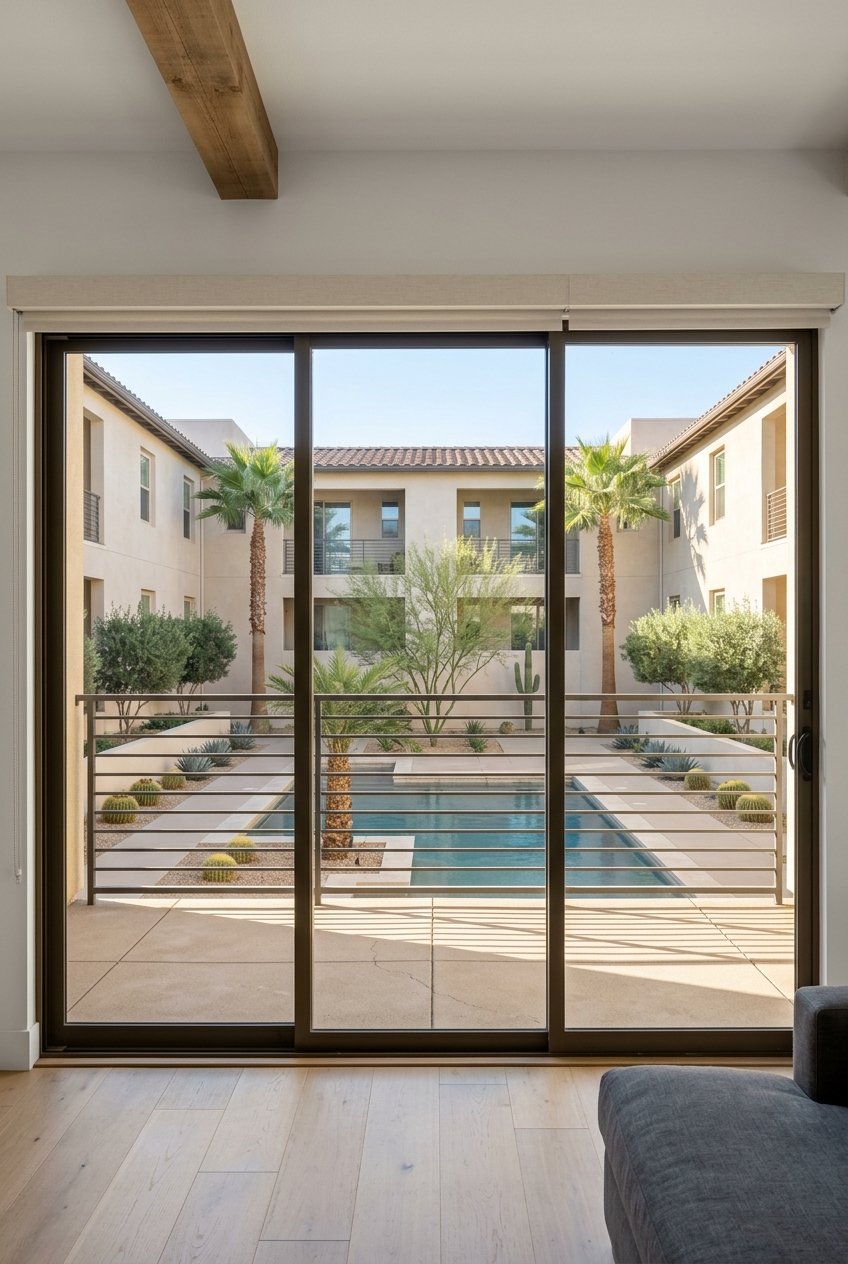
A single-family home often gives you more room to create a stronger guest experience. In Scottsdale, demand tends to reward features such as bedroom count, pools, views, outdoor space, hot tubs, kitchens, laundry, and parking.
That setup can be easier to position for whole-home stays and group travel. While this is not a formal rule, the market data suggests that homes with useful layouts and desirable amenities often have a better chance to stand out.
In South Scottsdale, this can be especially important because of the larger supply base. If you are entering a crowded field, it helps to have a property that is easier to photograph, easier to use, and easier to justify at your target nightly rate.
In South Scottsdale and Old Town, the neighborhood name alone is not enough. Product quality matters.
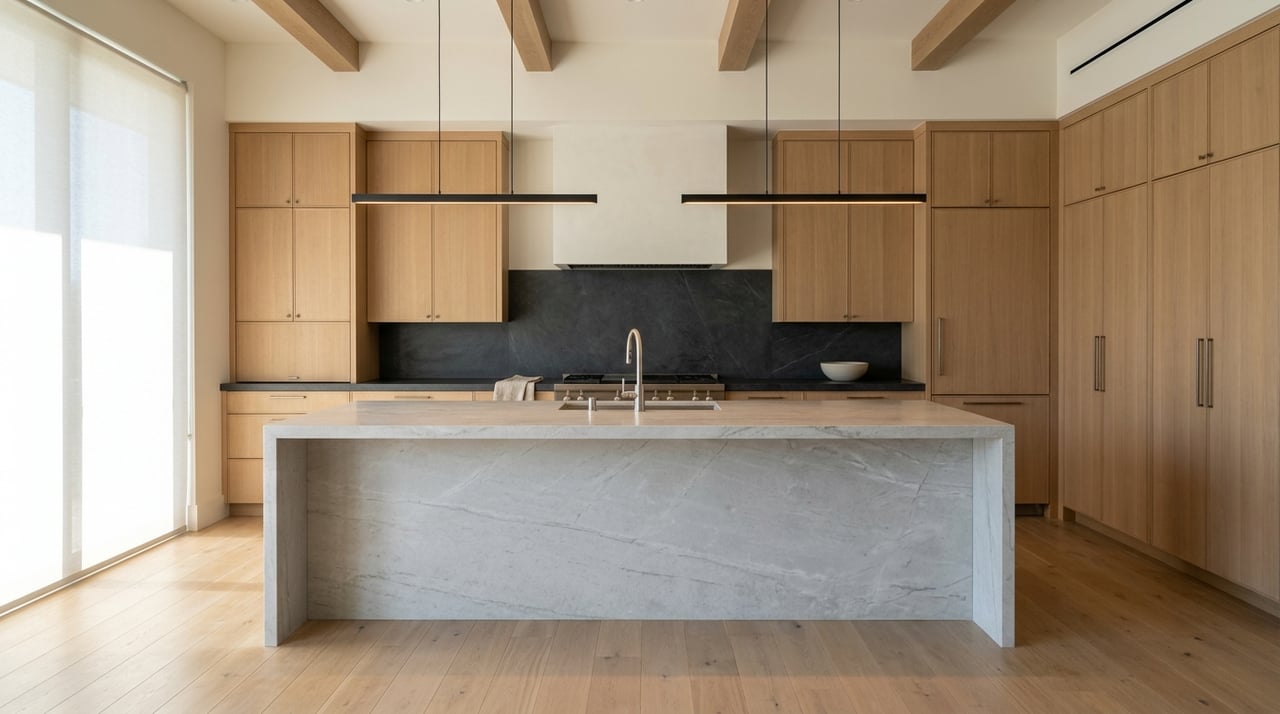
A well-positioned rental usually combines practical function with visual appeal. Guests often look for pools first, followed by views, outdoor space, and hot tubs, while kitchens, laundry, and parking remain highly useful day-to-day features.
That creates a clear lesson for investors. If a property feels easy for groups to enjoy and photographs well online, it may have a better shot at standing out in a competitive market.
For Frank Realty Group’s investor-minded clients, this is where design and renovation strategy can create real value. The right improvements are not just cosmetic. They can support stronger positioning, more consistent bookings, and a more marketable asset if you decide to sell later.
Every short-term rental market has upside and friction. Scottsdale is no exception, and a realistic buy box should account for both.
Competition is one of the biggest underwriting issues here. With 3,144 listings in South Scottsdale and 1,091 in Old Town, your pricing power depends on how well your property stands out.
That means it is risky to buy based on popularity alone. A great location can help, but it will not automatically overcome a weak layout, dated finishes, or poor amenity package.
Regulatory risk in Scottsdale is more about compliance and enforcement than an outright ban. Arizona law allows Scottsdale to regulate health and safety issues, nuisance concerns, local permits, contact information, insurance, and advertising.
Repeated verified violations can lead to penalties and permit suspension. In practice, that means noise, parking, trash, and party complaints can become real financial issues if the property is not managed carefully.
Insurance, tax registration, license maintenance, furnishing, cleaning, and ongoing upkeep all affect your true return. Homes with pools or more complex HOA requirements can be especially easy to underestimate during the planning stage.
That is why conservative budgeting matters. It is better to be pleasantly surprised by lower costs than trapped by assumptions that only worked in a spreadsheet.
If you are comparing properties in South Scottsdale and Old Town, start with the basics and stay disciplined. A strong investment decision usually comes from careful screening, not excitement over a single feature or trendy address.
Use a checklist like this when reviewing options:
For many investors, the best opportunities are not always the flashiest ones. A property with solid bones, good parking, functional outdoor space, and a smart renovation plan can outperform a more obvious listing if the numbers and compliance picture are stronger.
Short-term rental investing in Scottsdale is part market analysis, part property selection, and part execution. You need to know what the area supports, what the rules require, and what kind of product can compete in a crowded field.
That is where local insight can save time and money. If you are weighing a condo in Old Town, a single-family home in South Scottsdale, or a value-add property with renovation potential, a grounded second look can help you avoid common mistakes before you commit.
If you want help identifying opportunities, evaluating renovation potential, or understanding how a property fits today’s South Scottsdale and Old Town market, connect with Andy Frank for practical, local guidance.
Stay up to date on the latest real estate trends.
Jobey, Andy and the Frank Realty Group are dedicated to giving you an exceptional experience in your home buying and selling process. Contact us today to start your journey!