Central Phoenix Historic Homes: A Buyer’s Style Guide
November 21, 2025
November 21, 2025
Love the charm of a 1920s bungalow or a classic mid-century ranch, but unsure what that really means in Central Phoenix? You’re not alone. Buying a historic home comes with unique rewards and a few extra steps, from design review to systems upgrades. In this guide, you’ll learn how to identify the main architectural styles, where you’ll find them, what preservation rules can affect your plans, and how to budget for updates. Let’s dive in.
Central Phoenix saw major growth from the early 1900s through the 1960s, so you’ll find a rich mix of older homes near downtown, around Encanto Park and the Fairgrounds, and along the Central Avenue corridor. Neighborhoods commonly referenced by local preservationists include Willo, Encanto or Encanto-Palmcroft, Roosevelt, Coronado, Alvarado, Ashland Place, and older blocks in the North Central area. Exact district names and boundaries should be confirmed with official City of Phoenix maps.
For buyers, these areas often offer central locations with mature shade trees and walkable street patterns. Homes range from carefully restored properties to older houses that need systems work. You should expect a trade-off: authentic character and location balanced against higher maintenance, possible exterior renovation review, and variable modern amenities.
Knowing what you are looking at helps you spot value and plan upgrades more accurately. Here are the styles you’ll see most often in Central Phoenix’s historic neighborhoods.
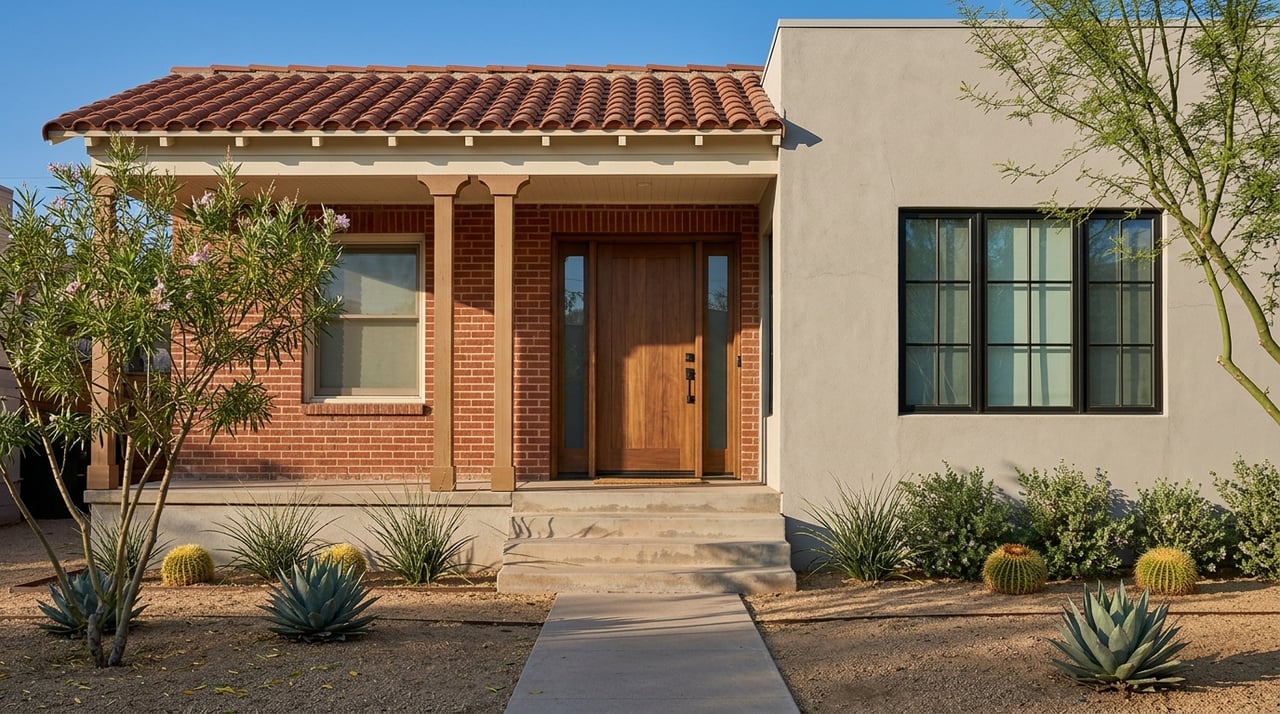
You’ll notice low-pitched gabled roofs, wide eaves with exposed rafter tails, and tapered porch posts on solid bases, often brick or stone. Inside, look for built-in cabinetry, plaster walls, and original wood windows with multi-lite upper sashes. These homes are usually one or one-and-a-half stories with modest footprints.
Common considerations include preserving original wood windows and trim and understanding that some older electrical elements may be present.
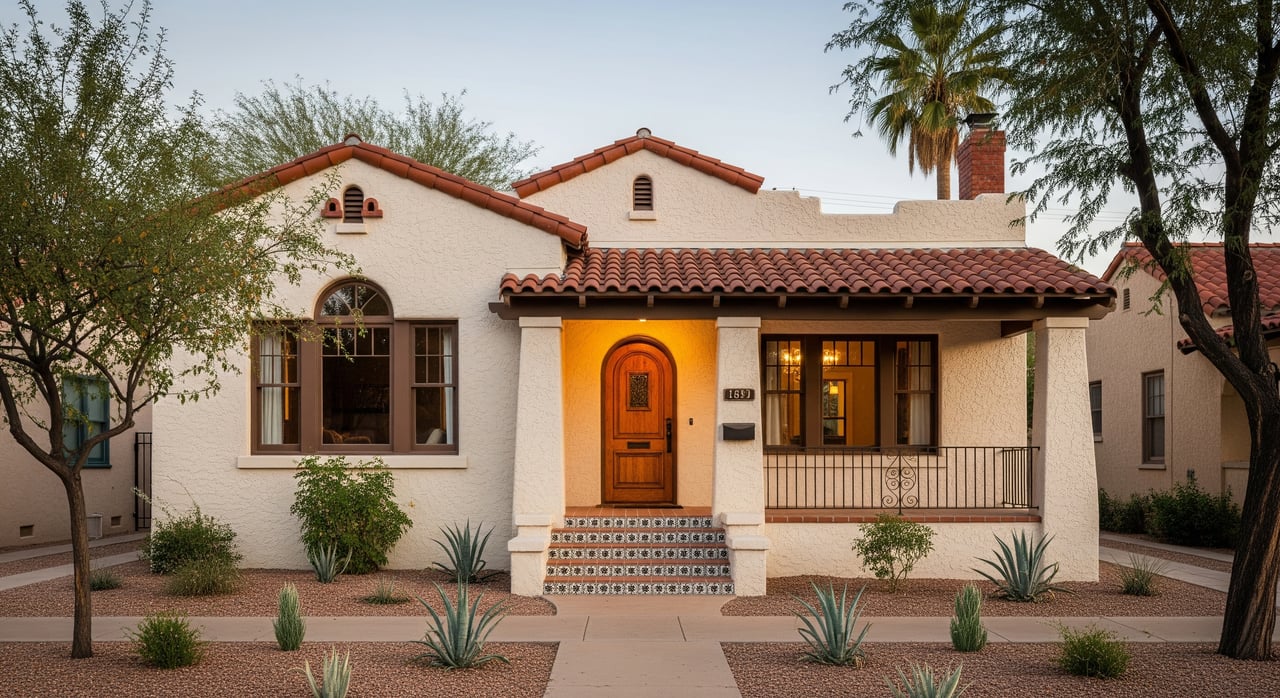
Expect stucco exteriors, red clay barrel tile roofs, arched openings, and decorative tile or wrought iron details. These styles fit Phoenix’s climate and appear in both modest and larger homes. Courtyards and small patios are common and enhance indoor-outdoor living.
Typical upkeep items include stucco repair and tile roof maintenance. Details like tilework and iron require careful restoration if you decide to refresh the exterior.
Tudor Revival homes feature steeply pitched roofs, occasional decorative half-timbering, and casement or leaded-glass windows. Colonial or Georgian Revival homes tend to be more symmetrical, with paneled front doors, pediments, and double-hung windows with shutters. These homes often have more showy trim and may be larger than bungalows.
Materials may include brick or stucco. Original windows and façade details are often key character elements that influence review if you plan exterior changes.
These homes bridge traditional forms and the emerging ranch style. Roofs are low to moderate pitch and ornamentation is kept simple. Interiors often include original plaster, compact kitchens, and limited closet space.
Expect to plan for kitchen modernization and storage solutions while keeping the period look intact.
You’ll see open floor plans, larger expanses of glass, strong horizontal lines, and low-pitched or flat roofs. Design often blends indoor and outdoor spaces with patios and courtyards. These homes become more common in later Central Phoenix builds and nearby mid-century subdivisions.
Watch for original single-pane glass, outdated HVAC systems, and possible older materials like asbestos in roofing or siding. Many buyers update mechanicals first, then tackle aesthetic changes.
Not all historic labels mean the same thing. Understanding how designation works helps you plan renovations and timelines.
If a home is within a locally designated historic district or is a locally designated property, exterior changes visible from the street can require a Certificate of Appropriateness or administrative review. That can include additions, window replacements, roofing material changes, and sometimes even paint color where guidelines address it. Interior changes are generally not reviewed unless a specific covenant or ordinance says otherwise.
City permits still apply for many projects. Historic review is an added step in designated areas.
Minor exterior work can often be reviewed at staff level within a few weeks. Larger projects that change massing, rooflines, or remove character elements may go before the Historic Preservation Commission, which follows a public meeting schedule. Plan for 30 to 90 days or more for exterior review, and longer for demolitions or major additions.
Federal rehabilitation tax credits primarily apply to income-producing properties and require certified work. State-level programs can change and may have specific eligibility rules. Local grants sometimes exist for façade work in select districts, but availability can be limited and competitive. Always verify current programs through the appropriate state and city offices.
Older homes reward you with character, but systems and materials may need attention. Prioritize safety, weather performance, and efficiency.
Historic homes in central locations often command a premium for location, lot attributes, and architecture. Price per square foot varies widely by condition, size, and level of modernization. Renovated period homes tend to sell at a higher multiple than similar unrenovated properties.
If you are buying a house that needs work, plan a realistic reserve for immediate updates. As a rough guide, light cosmetic and minor systems work can land in the several-thousand to low five-figure range. Moderate projects that combine a kitchen, key mechanicals, and selective structural or cosmetic work often reach the mid to high five figures. Larger renovations or full restorations can step into six figures and beyond, depending on scope. Always obtain multiple local, written estimates.
Use this quick list to keep your purchase on track.
You deserve a partner who understands both the transaction and the renovation. Our team blends full-service buyer representation with hands-on remodeling, staging, and design experience. We help you evaluate style, condition, systems, and review risk so you can buy with confidence.
We are a boutique, family-led team with verifiable production and a relationship-first approach. You get practical guidance on renovation strategies, realistic timelines, and how to present offers that reflect both market value and required upgrades. When you are ready to explore historic options, we are ready to help you move forward.
Ready to find your place in Central Phoenix’s historic districts? Connect with Jobey & Andy Frank for a plan that fits your goals and timeline.
Stay up to date on the latest real estate trends.
Jobey, Andy and the Frank Realty Group are dedicated to giving you an exceptional experience in your home buying and selling process. Contact us today to start your journey!