What to Know About a Central Phoenix Historic Home Renovation
May 7, 2026
May 7, 2026
If you love the idea of living in a historic Central Phoenix home, you probably also know the tension that comes with updating one. You want better function, comfort, and efficiency, but you do not want to strip away the details that made you fall for the house in the first place. The good news is that in Central City, thoughtful updates can absolutely improve day-to-day living while protecting the character that gives these homes their value and appeal. Let’s dive in.
Central Phoenix has some of the city’s oldest neighborhoods, especially in and around downtown. Areas such as Willo, Coronado, Garfield, Roosevelt, F.Q. Story, Encanto-Palmcroft, and Alvarado include homes from the late 1800s through the postwar era, which means their materials, layout, and design details often differ from newer properties.
In Phoenix, a historic property may be individually listed or located within a historic district. The city also looks at a home’s historic integrity through qualities like design, setting, materials, workmanship, feeling, and association. In simple terms, the goal is not just to make the home nicer. It is to keep the features that help it still read as a historic home.
Before you plan any remodel, confirm whether the home is on the Phoenix Historic Property Register or sits inside a historic district. That one step can shape everything from design choices to approval timelines.
Next, define your project scope clearly. In Phoenix, the biggest questions are whether your work affects the exterior, includes interior demolition, or changes utility systems like electrical, gas, or plumbing. Those details often determine whether your project is a simple refresh or a more involved historic review and permit process.
For properties listed on Phoenix’s Historic Property Register, the Historic Preservation Office reviews exterior changes for compatibility with the home and district. Minor work that clearly fits the guidelines may qualify for a Certificate of No Effect, while more substantial work may require a Certificate of Appropriateness, a pre-application meeting, and a public hearing.
This review can also apply to exterior work on non-historic homes located inside historic districts, as well as infill construction. That matters if you are planning to expand, rework a front elevation, or make visible changes that alter how the home fits within the streetscape.
Interior work also deserves more attention than many owners expect. Phoenix requires demolition permits before work begins, and listed buildings receive additional historic preservation review for interior demolition permits. If your remodel includes gutting a kitchen, removing walls, or opening up rooms, that review may come into play even if the outside of the house changes very little.
The clearest preservation principle in Phoenix is simple: repair first, replace last. The city’s guidelines focus on identifying and preserving character-defining features, maintaining original materials when possible, and replacing only when repair is not practical.
That approach matters because original brick, stucco, wood siding, windows, porches, roofing, and trim often tell the story of the house. Once those elements are removed, it can be hard to restore the same level of authenticity. In many cases, keeping and repairing original material helps preserve both charm and long-term appeal.
If replacement is necessary, Phoenix prefers matching or compatible materials and designs that repeat the original appearance. The goal is not to create something trendy or overly decorative. It is to make thoughtful updates that respect what was already there.
One of the easiest ways to lose historic charm is to add details that were never part of the home’s original style. Phoenix discourages creating a false historic appearance or over-improving a house with ornament, finishes, or features that do not fit its design.
That means your remodel should be guided by the home itself, not by a one-size-fits-all renovation trend. A 1930s brick bungalow, a Spanish Colonial Revival home, and a postwar ranch each have different proportions, materials, and architectural rhythms. The best updates feel natural to the house, not pasted onto it.
Sometimes you need more space, not just better finishes. In that case, Phoenix generally prefers additions on secondary or rear elevations, with massing that stays subordinate to the original structure.
In practical terms, the historic home should still remain the star. An addition should be compatible, but also clearly distinguishable from the original building. That balance helps preserve the historic form while making room for modern living.
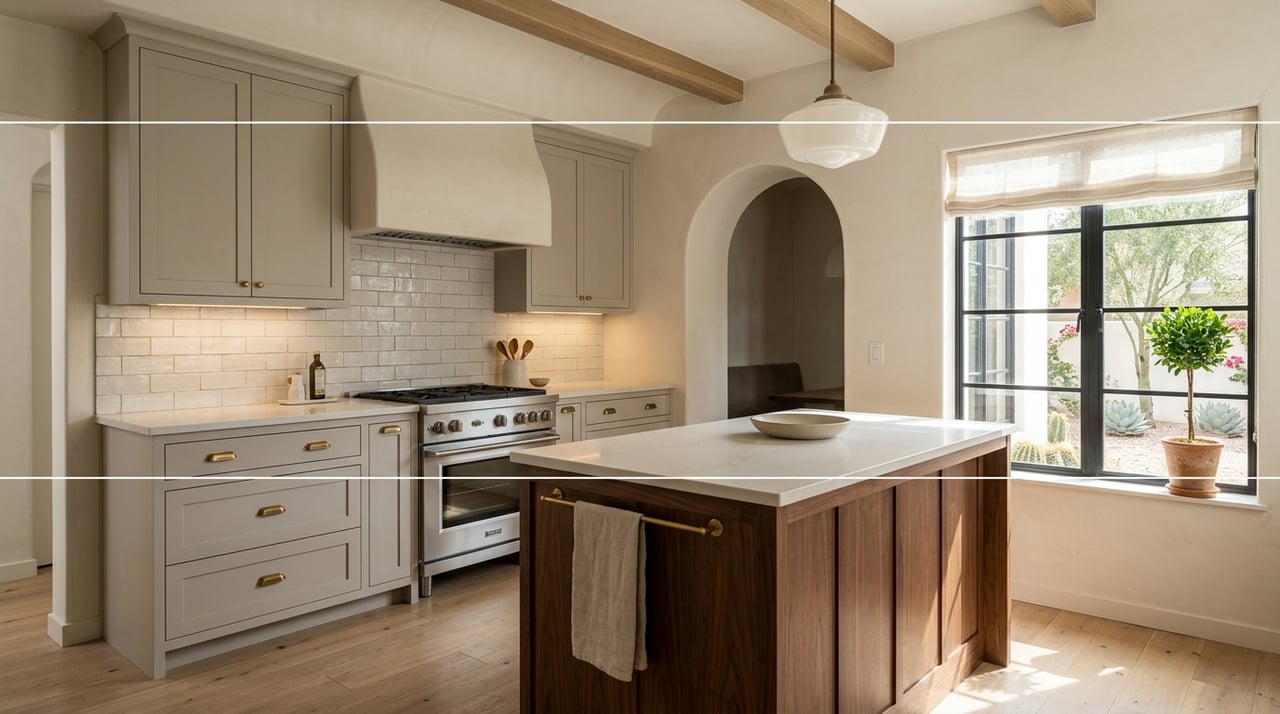
Kitchens and baths are often where owners want the biggest transformation. In historic homes, they are also some of the best places to modernize carefully because you can improve function without necessarily changing the home’s public character.
Cosmetic updates are usually the simplest route. Phoenix notes that painting and flooring do not require a permit, and kitchen updates that swap cabinets and fixtures in the same locations without structural or electrical changes are generally exempt.
The project becomes more complex when you start moving plumbing, relocating sinks or tubs, removing walls, rewiring, or changing gas lines. Those updates usually require permits, and in a historic property they may also raise preservation questions depending on what is being removed.
A good rule of thumb is this: hidden systems can usually be modernized more freely than visible character-defining finishes. If you can improve storage, appliances, lighting, and workflow while keeping the room aligned with the home’s original scale and feel, you are usually on the right track.
Windows are one of the most important decisions in any historic remodel. They affect curb appeal, natural light, energy performance, and overall historic integrity.
Phoenix’s guidance is clear that repair is preferred first. In many cases, weatherization, window repair, interior insulated blinds or shades, window films, or thicker glass in existing frames can improve comfort before full replacement is even necessary.
When replacement cannot be avoided, the new windows should match the original size, material, operating type, and muntin pattern as closely as possible. Phoenix also notes that true divided lights are preferred, with simulated divided lights accepted as an alternative. Compatible substitute materials like fiberglass or coated aluminum may work in some cases, while vinyl may not always perform as well in Phoenix’s climate.
Historic homes in Central Phoenix can absolutely become more comfortable. The key is choosing upgrades that improve performance without stripping away original fabric.
Phoenix recommends starting with an energy audit. From there, common improvements may include duct sealing, insulation, efficient HVAC systems, water heaters, appliances, window treatments, and shade trees.
The city also advises placing mechanical, electrical, solar, and accessibility upgrades where they are least visible. Roof-mounted equipment should generally sit on rear roof slopes or behind parapets, and accessibility features should be designed to minimize the loss of historic details.
This is often where a thoughtful plan makes the biggest difference. You do not have to choose between livability and charm. You just need to prioritize upgrades that work with the house instead of against it.
Exterior materials do a lot of heavy lifting in a historic home’s appearance. Phoenix specifically encourages owners to repair and retain original brick, stucco, and wood siding, and notes that changing siding material can significantly reduce historic integrity.
Roofing deserves the same level of care. The city recommends retaining or replacing roofing in kind rather than switching to a different roof type. It also warns against abrasive cleaning methods like sandblasting, which can permanently damage historic materials.
If your home’s exterior needs work, focus first on stabilization and compatible repair. Those choices usually do more to preserve value and curb appeal than a dramatic redesign ever could.
Some owners may be eligible for financial support or tax-related programs tied to historic properties. Phoenix has offered exterior rehabilitation assistance for certain eligible historic homes, with matching support for approved exterior work like roofing, foundations, masonry or stucco, windows and doors, porches, and reversing incompatible alterations.
Program timing and availability can vary, so it is worth checking early if you are considering a larger project. A smaller subset of owner-occupied National Register properties may also qualify for Arizona’s State Historic Property Tax program, which requires review before work affecting public appearance and uses rehabilitation standards in the approval process.
If you are buying or already own a historic home in Central Phoenix, the best renovation plan usually starts with restraint. Keep what makes the home special, modernize what improves daily life, and make visible changes only after you understand the city’s review process.
A practical order often looks like this:
That kind of planning protects more than charm. It can also help you avoid costly mistakes, delays, and design choices that are hard to reverse later.
Whether you are preparing to buy, deciding how much to renovate before listing, or trying to make a newly purchased home work better for modern life, a historic property deserves a strategy that respects both design and resale. If you want guidance on how to improve a Central Phoenix home without losing what makes it special, connect with Andy Frank for a thoughtful, design-savvy plan.
Stay up to date on the latest real estate trends.
Jobey, Andy and the Frank Realty Group are dedicated to giving you an exceptional experience in your home buying and selling process. Contact us today to start your journey!